
A2-MEASToward the Era of Agentic Embodied Intelligence

AutoLab, School of Artificial Intelligence, Shanghai Jiao Tong University

Research Lab, Anyverse Dynamics

What embodied systems co-evolve with foundation models?

Meet A²-MEAS

SYSTEM: Distilling Foundation Model Capabilities into Action Policies

Code as a scaling interface

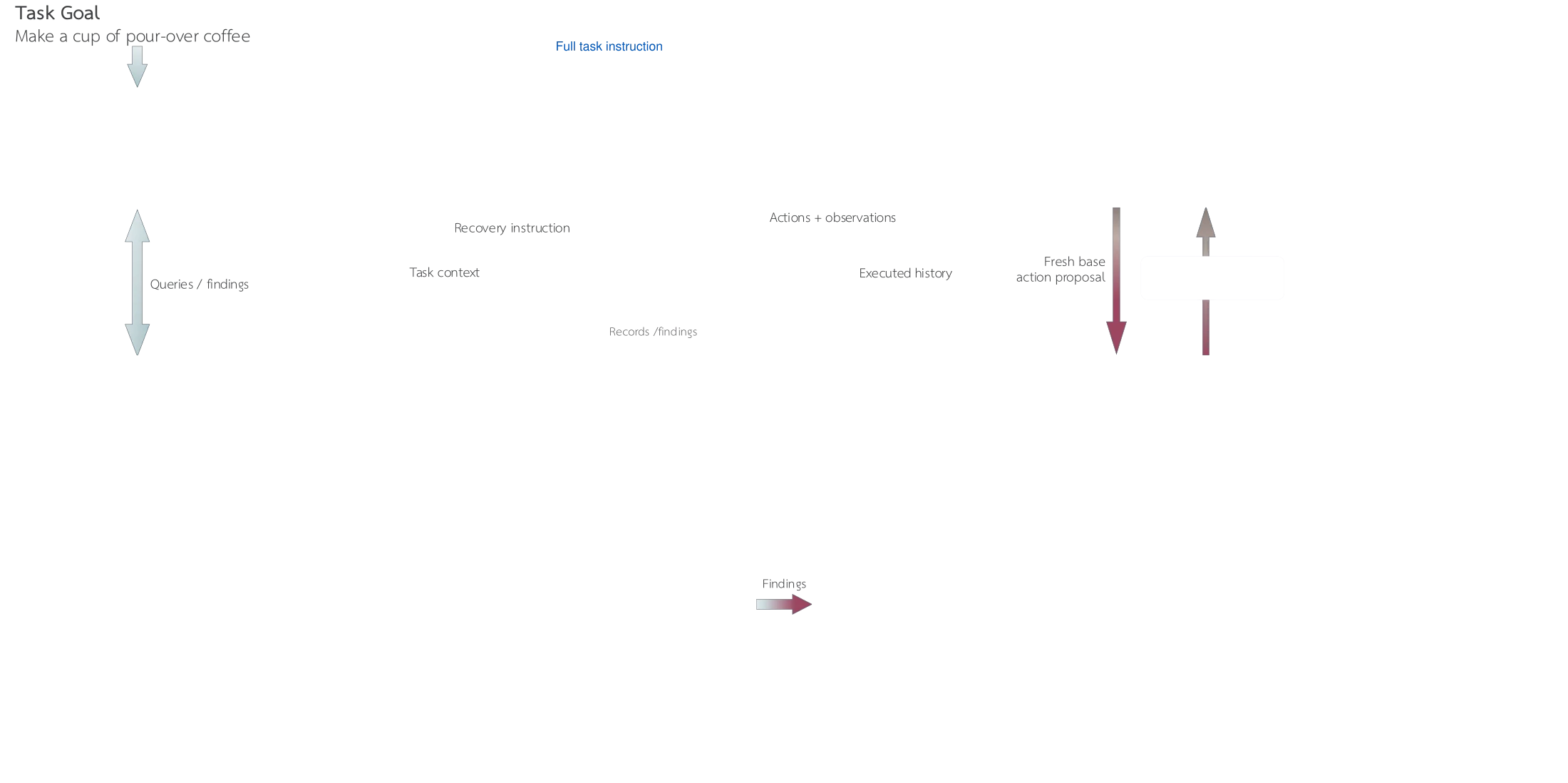
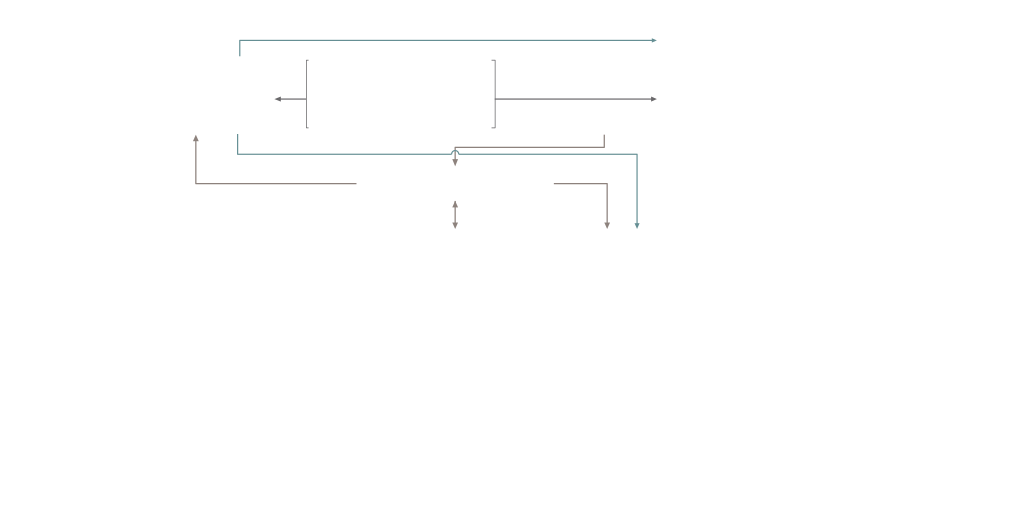
MetaBrain maintains the goal, diagnostic agents resolve physical questions, and a grounded correction interface guides A2-WLA. Nominal control repeats action and observation; diagnosis and correction are invoked when recovery is needed.

Original nominal-control, recovery and feedback connections from the paper.
The A²-MEAS framework

Grounded correction interface

MetaBrain’s recovery instruction, verified spatial evidence, executed history and a fresh base-policy proposal are encoded into a correction code. A residual adapter uses this code to adjust action generation, with all model parameters fixed during deployment.

Original arrows connecting the modules in the paper diagram.

Correction supervision

Correction examples are mined offline by comparing a frozen policy’s unexecuted proposals with expert demonstrations. Grounded visual evidence and corrective instructions form the training context; the expert continuation supervises the correction branch while the base policy stays frozen.

Original arrows connecting the modules in the paper diagram.

Execution and recovery

When execution becomes abnormal, the system pauses pending controls and gathers fresh evidence for a new recovery attempt. It checks the corrected candidate before execution, verifies the outcome and either resumes the unfinished task or updates the recovery query within the remaining budget.

Original arrows connecting the modules in the paper diagram.

MODEL: Simple but Surprisingly Strong World-Language-Action Model

A2-WLA action policy

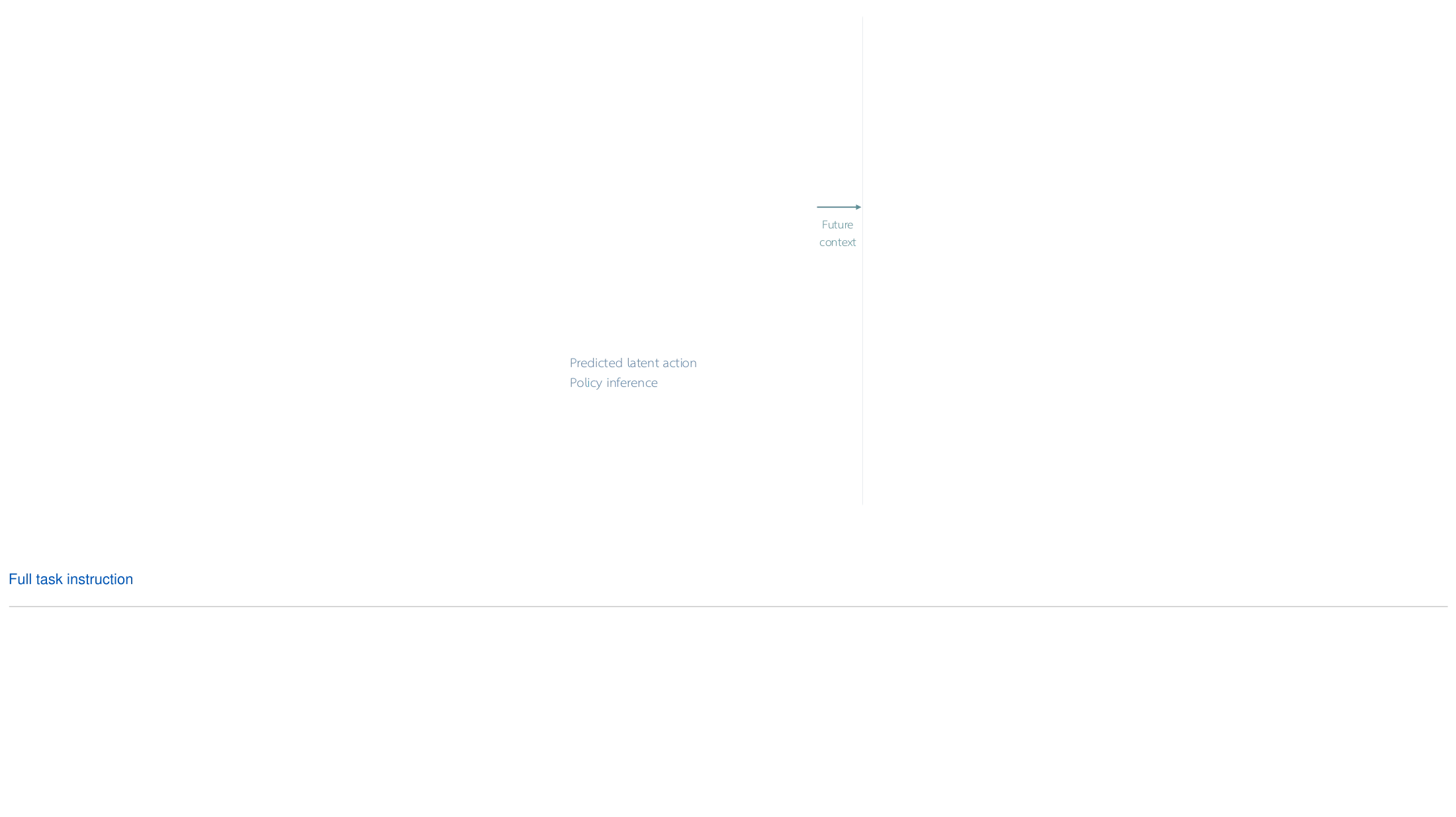
A2-WLA combines recent visual history with predicted scene features to generate continuous action chunks. Its history encoder captures observed change, while the latent world model supplies future context alongside the robot state.

Original arrows connecting the modules in the paper diagram.

INFRASTRUCTURE: 4× Training Throughput of π0.5 at a Similar Model Size

From data loading to distributed optimization

The training pipeline reduces repeated data preparation, reuses shared model computation, and distributes optimizer work across GPUs.

Data processing and distributed execution

Batch JPEG decoding, Apache Arrow caches and asynchronous prefetching reduce repeated input work, cutting data preparation from about 1,300 ms to 28 ms and single-GPU step time from 3.03 s to 1.13 s. Parallel dataset preparation and streamlined synchronization improve multi-GPU startup and execution.

Training-throughput optimizations

Dedicated computation paths and scheduling, static caches and Sharded Local Muon yield independent throughput gains of 36.97%, 5.70% and 1.7%, respectively. With shared-prefix execution and the other pipeline optimizations, the final eight-GPU implementation reaches 427.1 demonstration samples/s, versus 106 for the π0.5 reference—a 4.03× gain.

SIMULATION

BEHAVIOR & RoboTwin evaluation

BEHAVIOR

System performance

2026 public set100 tasks1,000 episodes

Swipe to see all columns

System performance
ConfigurationQ-scoreSuccess (%)SuccessesCoverage
A2-WLA single model0.459727.20272/1,00070/100
A2-WLA multiple models0.604040.60406/1,00080/100
A2-MEAS complete system0.641145.40454/1,00088/100

Public-set comparison

Self-reported entriesSource-specific protocols

Swipe to see all columns

Public-set comparison
Team or submissionInstitutionQ-scoreSR (%)
George AlbrechtCAU / GMU / EWHA0.386220.00
MiruaXiaomi Robotics0.397119.80
VERAAXXX0.400025.00
Newbiemorphic & 4dvlab0.404021.70
Huawei AI Algorithm DeptHuawei Technologies0.407625.20
LionLionrock AI Lab0.408221.80
The Southern CrossIndependent0.409923.00
MXIBeijing 1011 Technology0.418722.70
SoraIndependent0.419522.50
Multimor0.430219.80
Anyverse A2RAnyverse-A2R0.432124.70
VGI-SKTSNU / SKT0.444922.30
Robot Learning CollectiveIndependent0.445827.30
tasman3001Ambarella, Inc.0.480830.40
asteroidCLab0.514330.80
A2-MEAS (ours)Anyverse–AutoLab0.641145.40

Results across evaluation settings

2025 public references2026 subset: 50 tasks, 500 episodes

Swipe to see all columns

Results across evaluation settings
MethodQ-scoreSR (%)Evaluation context
Competition public-dataset evaluation [11]
RLC0.260511.204 checkpoints
Comet0.183014.40Competition submission
SimpleAI Robot0.194314.00Competition submission
The North Star0.170212.80Competition submission
Post-competition and subsequent reports
Openpi Comet [23]0.3450—2 checkpoints, reinforcement fine-tuning
π0.5 [7]0.2626—4 epochs, single checkpoint
G0.5 [7]0.2904—1 epoch, single checkpoint
G0.5 [7]0.3136—4 epochs, single checkpoint
Our 2026 public-set subset, 50 tasks and 500 episodes
A2-WLA single model0.452225.604 epochs, single checkpoint
A2-WLA multiple models0.575537.4025 checkpoints
A2-MEAS complete system0.619141.40Including the full system

RoboTwin 2.0

Bimanual manipulation

Clean and randomized settingsSource-specific protocols

Swipe to see all columns

Bimanual manipulation
Method or configurationClean (%)Randomized (%)Average (%)
π0.5 [9, 34]82.7476.7679.75
LingBot-VLA (without depth) [34]86.5085.3485.92
LingBot-VLA (with depth) [34]88.5686.6887.62
Motus [35]88.7087.0087.85
StarVLA [36]88.7087.8088.25
LingBot-VA [37]92.9091.5092.20
Fast-WAM [38]91.9091.8091.85
G0.5 [15]93.7092.8093.25
LingBot-VLA 2.0 [39]93.5292.8093.16
MotuBrain [40]95.8096.1095.95
Our configurations
A2-WLA94.2693.7093.98
A2-MEAS95.0895.0295.05

REAL WORLD

Real-World Manipulation

Long-Horizon Pour-Over Coffee Preparation

Full-task demonstration

Grasp Correction and Step Completion

Following a missed filter grasp, the robot opens and adjusts the gripper, regrasps, and lifts the filter clear to continue the task. From the original start, the Adapter raises step completion from 71% to 98% in Step 2 and 76% to 95% in Step 7.

After failure and rollback, the failure-history-conditioned Adapter achieves 94% and 82% step completion, compared with 14% and 8% for base-policy retry, respectively. Each condition uses 100 trials per step.

Household Tasks

Click a video to enlarge.

Across 12 tabletop tasks in five household settings—study, bedroom, living room, kitchen, and entryway—A2-WLA is evaluated on grasping, placement, action sequencing, and contact control.

With high-level feedback and test-time correction disabled, the full A2-WLA configuration achieves 57.92% macro-averaged whole-task success over 20 trials per task, compared with 26.67% for π0.5.

THE PEOPLE BEHIND THE WORK

Authors & contributions

Core contributors
  • Chao Liang
  • Ke Chen
  • Fengxiaoxiao Li
  • Shibo Huang
  • Yufeng Sun
Other contributors
  • Zhaokai Yin
  • Jianhuan Lai
  • Haozhe Feng
  • Chenghuan Jia
Project leaders
  • Chao Liang
  • Zhipeng Zhang
Corresponding author
Zhipeng Zhang

AutoLab, School of Artificial Intelligence, Shanghai Jiao Tong University

Research Lab, Anyverse Dynamics

BibTeX

@misc{liang2026eraagenticembodiedintelligence,
  title = {Toward the Era of Agentic Embodied Intelligence},
  author = {Chao Liang and Ke Chen and Fengxiaoxiao Li and
    Shibo Huang and Yufeng Sun and Zhaokai Yin and
    Jianhuan Lai and Haozhe Feng and Chenghuan Jia and
    Zhipeng Zhang},
  year = {2026},
  eprint = {2611.09124},
  archivePrefix = {arXiv},
  primaryClass = {cs.RO},
  url = {https://arxiv.org/abs/2611.09124}
}